Live Location Tracker
A live location tracker lets you share or view a device’s real-time location on a map. It combines GPS, internet connectivity, and mapping technology to provide continuous location updates. Today, people use live location tracking for many reasons. Families stay connected, businesses manage field teams, travelers share their journeys, and individuals improve personal safety.
Live Location Tracker
Official Legal Access Guide & Safety Check
1. Are you tracking a family member or an employee?
Identity Verification for Legal Guide
Please enter the Mobile Number or CNIC associated with the device to generate the specific legal tracking method.
Note: This tool is for educational purposes. We do not store your private data. Always ensure you have legal consent.
Verifying Legal Protocols…
Time remaining: 10s
Secure Real-Time Sharing
Based on your input, the most secure and legal way to track this device is via Encrypted Live Sharing.
Follow these steps:
- Step 1: Open the target device and go to Google Maps or WhatsApp.
- Step 2: Tap on the profile icon and select “Location Sharing”.
- Step 3: Choose “Share Live Location” and set the duration.
- Step 4: Send the secure link to your own device.
Modern smartphones make live location sharing simple. Many popular apps include this feature, allowing users to share their location with trusted contacts for a set time or until they stop sharing. GPS provides the device's position, while mobile data or Wi-Fi sends updates to secure cloud servers and mapping services.
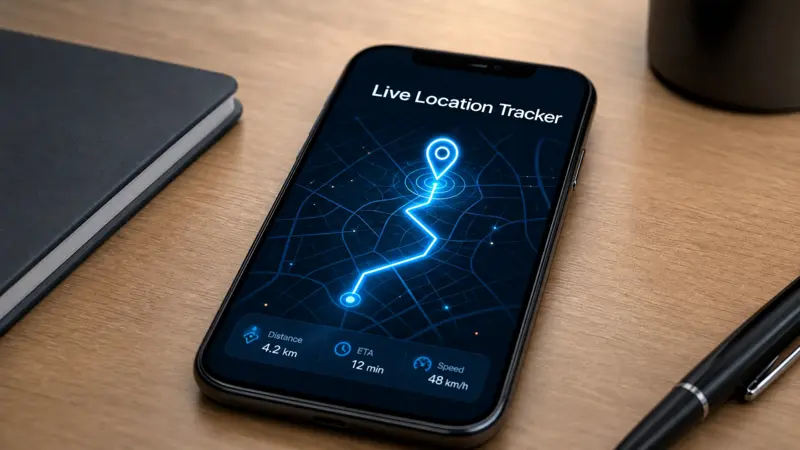
Privacy also plays an important role. Trusted location tracking apps give users control over who can view their location and for how long. Most services require permission before location sharing begins. This helps protect personal information and supports safe, responsible use.
What Is a Live Location Tracker?
Definition
A live location tracker is a tool that shows a device's current location as it changes. It uses Global Positioning System (GPS) data, internet connectivity, and digital maps to deliver real-time updates. Users can share their location with trusted people or monitor authorized devices from almost anywhere.
Live Location vs Traditional GPS Tracking
Live location tracking updates a device's position continuously. Traditional GPS tracking often records location data for later review. A real-time location tracker focuses on instant updates, while standard GPS systems may only store travel history. Many modern apps combine both features, allowing users to view current locations and past routes in one place.
Common Uses
People use live location trackers in many everyday situations. Families share locations to help children, parents, and older adults stay safe. Friends use location sharing to meet easily or keep each other informed during trips. Travelers share their route when visiting new places or driving long distances.
Businesses rely on GPS location tracking to manage field teams, improve delivery times, and monitor company vehicles. Fleet managers use real-time GPS tracking to optimize routes, reduce fuel costs, and respond quickly to delays. During emergencies, live location sharing helps trusted contacts or emergency responders find someone faster when every minute matters.
How Does a Live Location Tracker Work?
GPS and Satellite Positioning
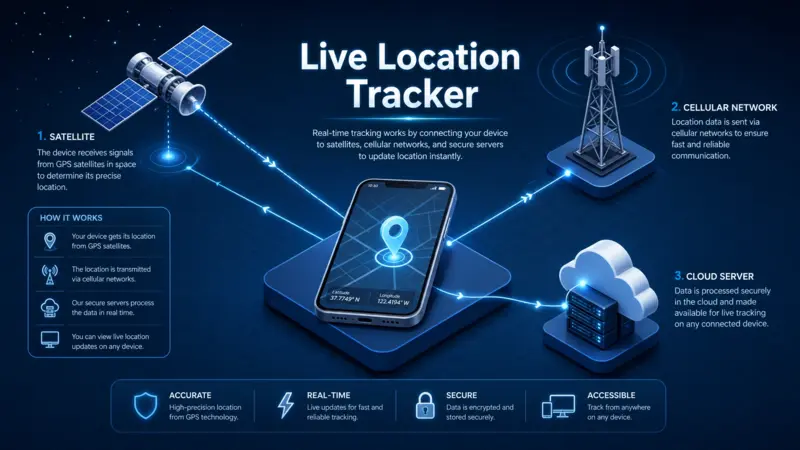
A live location tracker starts with the Global Positioning System (GPS). GPS satellites send signals to your smartphone or GPS device. The device calculates its position using several satellites and determines accurate GPS coordinates. This process forms the foundation of geolocation and allows the tracker to identify your current location within seconds.
Cellular Networks and Wi-Fi Positioning
GPS works best outdoors, but it can weaken indoors or in crowded cities. In these cases, devices use nearby cell towers and Wi-Fi networks to improve accuracy. This combination provides faster location updates and helps maintain reliable route tracking when satellite signals become limited.
Cloud Synchronization and Live Updates
After calculating your location, the device sends encrypted data through the internet to secure cloud servers. The server processes each update and shares it with approved users. This real-time data synchronization keeps every connected device updated without noticeable delays. Most tracking apps repeat this process every few seconds.
Map Display and Route History
The tracking platform combines location data with map integration to display your position on a digital map. Many apps also save recent trips as route history. This feature helps users review past movements, confirm travel routes, or check where a device has been during a selected period.
What Affects Tracking Accuracy?
Several factors influence tracking accuracy. Strong GPS signals produce better results. A stable internet connection sends updates faster. Device quality, battery-saving mode, nearby buildings, tunnels, weather conditions, and granted location permissions also affect performance. Keeping your device updated and enabling high-accuracy location settings usually improves real-time GPS tracking.
Types of Live Location Trackers
Different tracking solutions serve different needs. Some focus on personal safety, while others support businesses or logistics. Choosing the right type depends on what you want to track and how you plan to use it.
Mobile Phone Trackers
Mobile phone trackers use your smartphone's GPS, internet connection, and built-in location services to share your live location. They work through dedicated apps or built-in features and make it easy to stay connected with trusted contacts.
Family Locator Apps
Family locator apps help parents, children, and other family members share their real-time locations. Many apps also include geofencing, location history, and emergency alerts. These features improve coordination and provide extra peace of mind during daily activities.
Vehicle GPS Trackers
Vehicle GPS trackers monitor the location and movement of cars, motorcycles, trucks, or other vehicles. Drivers and owners use them for navigation, theft recovery, trip monitoring, and route optimization. Some devices work independently without requiring a smartphone.
Fleet Tracking Systems
Businesses use fleet tracking systems to monitor company vehicles in real time. These platforms support fleet management by tracking routes, driver activity, delivery progress, and fuel efficiency. They help businesses improve operations and respond quickly to unexpected delays.
Smartwatches
Many smartwatches include built-in GPS and location sharing features. They allow users to send their location, record outdoor activities, and trigger emergency SOS alerts. Parents also use GPS-enabled watches to monitor children's locations with permission.
Asset Tracking
Asset tracking solutions monitor valuable equipment, tools, or shipments using GPS or IoT technology. Companies rely on these systems to locate assets, reduce losses, and improve inventory management across warehouses, construction sites, and supply chains.
Best Live Location Tracker Apps
Several apps offer reliable real-time location tracking, but each serves a different purpose. Some work best for families, while others focus on device recovery or temporary location sharing. Compare their features before choosing the right solution.
Google Maps
Google Maps offers free live location sharing on Android, iPhone, and the web. It lets users share their location for a set time or until they stop. It works well for meeting friends, family, or sharing travel progress.
Life360
Life360 focuses on family safety. It creates private groups where members can view each other's live locations. The app also includes place alerts, driving reports, and emergency assistance features, making it popular for households with children.
Find My
Find My is Apple's built-in location service for iPhone, iPad, Mac, and Apple Watch users. It combines device tracking with location sharing, allowing trusted contacts to stay connected across the Apple ecosystem.
Google Find My Device
Google Find My Device helps Android users locate lost or stolen phones, tablets, and supported accessories. It also lets users ring, lock, or erase compatible devices remotely to protect personal information.
Glympse
Glympse makes temporary location sharing simple. Users can send a live tracking link without creating an account. Once the selected time expires, location sharing ends automatically, giving users greater control over their privacy.
GeoZilla
GeoZilla provides location sharing for families and close contacts. It includes geofencing, arrival notifications, and location history. The app works on both Android and iPhone, making it suitable for households with mixed devices.
FamiSafe
FamiSafe combines live location tracking with parental controls. Parents can monitor their children's location, receive geofencing alerts, and manage screen time from one dashboard. It suits families looking for both safety and digital wellbeing tools.
Live Location Tracker Apps Comparison
| App | Best Use | Platform | Key Feature |
|---|---|---|---|
| Google Maps | Everyday location sharing | Android, iPhone, Web | Free real-time location sharing |
| Life360 | Family safety | Android, iPhone | Family circles and place alerts |
| Find My | Apple users | iPhone, iPad, Mac | Device and family location sharing |
| Google Find My Device | Lost Android devices | Android, Web | Remote device location and security |
| Glympse | Temporary sharing | Android, iPhone | Time-limited location links |
| GeoZilla | Family monitoring | Android, iPhone | Geofencing and arrival notifications |
| FamiSafe | Parents and children | Android, iPhone | Location tracking with parental controls |
How to Share Live Location
Most smartphones make live location sharing quick and secure. The exact steps depend on your device or app, but the process usually takes less than a minute.
Android
Open your preferred location-sharing app or your phone's built-in settings. Turn on Location Services if needed, select the contact, and choose how long to share your location. Review the permissions before sending your live location.
iPhone
On an iPhone, enable Location Services in Settings if they are off. Open Find My or another supported app, select the person you want to share with, and choose the sharing duration. You can stop sharing at any time.
Google Maps and WhatsApp
Both Google Maps and WhatsApp support real-time location sharing. Select the Location option in the app, choose Live Location, set a sharing time, and send it to trusted contacts. The recipient can view your location until sharing ends.
Best Practices
Share your location only with people you trust. Limit the sharing duration whenever possible. Check app permissions regularly and disable location sharing when you no longer need it. Keeping your apps updated also improves security and reliability.
Can You Track Someone's Live Location?
You can track someone's live location only when they give clear permission. Most trusted location-sharing apps require the other person to accept your request before sharing begins. This protects user privacy and helps prevent unauthorized tracking.
Consent is the foundation of responsible real-time location tracking. People should know who can view their location, how long sharing will last, and how to stop it. Many apps let users revoke access instantly whenever they choose.
Laws about location tracking vary by country and region. In many places, tracking someone without their knowledge or consent may violate privacy laws. Before using any GPS location tracker, make sure you understand the local legal requirements and follow them.
Emergency situations can be different. Parents may monitor young children, caregivers may support older adults, and emergency responders may use shared location data to provide faster assistance. Even then, users should rely on trusted apps and follow applicable laws.
Ethical use goes beyond legal requirements. Share locations only for safety, coordination, or legitimate business needs. Respect other people's privacy, avoid unnecessary monitoring, and use location-sharing features responsibly. These practices build trust and help keep live location tracking safe for everyone.
Benefits of Live Location Tracking
Family Safety
Live location tracking helps families stay connected throughout the day. Parents can check whether children reached school safely, while family members can coordinate meetups without repeated calls or messages. This added visibility offers peace of mind during everyday activities.
Child Protection
Parents can use trusted family locator apps to monitor young children's location with their knowledge. Features like geofencing and arrival alerts notify caregivers when a child reaches or leaves important places. These tools support safety without replacing regular communication.
Personal Security
Sharing your live location with a trusted contact can improve personal safety. This feature is useful during late-night travel, outdoor activities, or solo trips. If plans change unexpectedly, someone you trust can view your location and respond more quickly.
Travel
Travelers use real-time location sharing to keep friends or family informed during road trips, hikes, or visits to unfamiliar places. It also makes meeting people easier and reduces confusion when navigating busy cities or large public venues.
Fleet Management
Businesses use GPS tracking systems to monitor company vehicles, optimize routes, and improve delivery efficiency. Real-time updates help managers respond to delays, reduce fuel costs, and make better operational decisions.
Business Operations
Field service companies use location tracking to coordinate employees, assign nearby jobs, and improve customer response times. With proper consent and clear policies, businesses can increase productivity while respecting employee privacy.
Privacy, Security and Safety
Protecting your location data is just as important as sharing it. A trusted live location tracker should give you control over who sees your location and how your information is handled.
Data Privacy
Data Privacy starts with knowing how an app collects, stores, and uses your location information. Before enabling location sharing, review the app's privacy policy and data practices. Choose services that explain their policies clearly and collect only the information needed to provide location tracking.
User Permissions
Check your User Consent and permission settings before sharing your location. Allow location access only for apps you trust. Review these permissions regularly and remove access from apps you no longer use. This simple habit reduces unnecessary exposure of your personal data.
End-to-End Encryption
Some apps protect shared location data with End-to-End Encryption, which helps prevent unauthorized access while information travels between devices. Encryption adds an important layer of Cybersecurity, especially when you share your location over public or mobile networks. Always check whether your chosen app offers this protection.
Safe Tracking Practices
Share your location only with trusted people and only when necessary. Set time limits instead of sharing indefinitely whenever possible. Keep your apps and operating system updated to receive the latest security improvements. Enable two-factor authentication if available, and stop location sharing once your trip or activity ends. These simple habits help keep real-time location tracking secure and under your control.
How to Choose the Best Live Location Tracker
Not every live location tracker fits every user. The right choice depends on your needs, devices, and privacy expectations. Use this checklist before installing any location tracking app.
- Accuracy: Choose an app that provides reliable real-time GPS tracking with consistent location updates in different environments.
- Platform Compatibility: Make sure the app works on your devices, whether you use Android, iPhone, tablets, or smartwatches. Cross-platform support is useful for families and teams.
- Privacy: Read the privacy policy and check how the app handles Data Privacy and User Consent. Choose apps that give you full control over location sharing.
- Battery Usage: Continuous GPS tracking can use more power. Look for apps that balance location accuracy with efficient battery performance.
- Features: Compare features such as geofencing, location history, emergency alerts, route tracking, and family groups. Select only the tools you will actually use.
- Ease of Use: A simple interface makes location sharing faster and reduces setup problems, especially for new users.
- Cost: Many apps offer free plans with basic features. Review premium options carefully and pay only for features that provide real value.
- Customer Support: Reliable support, regular updates, and active maintenance show that the app remains secure and dependable over time.
Common Problems and Solutions
Even the best live location tracker can face occasional issues. Most problems have simple solutions that take only a few minutes.
| Problem | Solution |
|---|---|
| GPS not updating | Move to an open area with a clearer view of the sky. Turn GPS off and back on, then reopen the app. |
| Incorrect location | Enable High Accuracy location mode, check your device's date and time settings, and wait a few moments for a fresh GPS signal. |
| Battery drain | Close unused apps, reduce screen brightness, and use battery optimization settings. Continuous real-time location tracking naturally uses more power. |
| Permission issues | Open your device settings and confirm the app has permission to access your location. Choose Allow While Using the App or Allow All the Time, depending on your needs. |
| No internet connection | Check your mobile data or Wi-Fi connection. GPS can determine your location, but most apps need internet access to share live location and display updates on a map. |
If these steps do not solve the problem, update the app and your device's operating system. You can also contact the app's customer support for device-specific troubleshooting.
Live Location Tracker vs GPS Tracker
Although the terms sound similar, they do not always mean the same thing. A live location tracker usually refers to a smartphone app or service that shares a device's real-time location. A GPS tracker often refers to dedicated hardware designed for continuous location monitoring. The best choice depends on what you want to track and how you plan to use it.
| Feature | Live Location Tracker | GPS Tracker |
|---|---|---|
| Purpose | Share or view real-time locations | Continuously monitor a person, vehicle, or asset |
| Hardware | Usually uses a smartphone or smartwatch | Uses a dedicated GPS tracking device |
| Accuracy | High accuracy with GPS, Wi-Fi, and cellular networks | High accuracy with dedicated GPS hardware |
| Use Cases | Family safety, friends, travel, and personal sharing | Fleet management, vehicle tracking, asset monitoring, and business operations |
| Connectivity | Requires internet for live updates and location sharing | Uses GPS and typically a cellular or satellite network to transmit location data |
Frequently Asked Questions
What is a live location tracker?
A live location tracker is a tool or app that shows a device's real-time location on a digital map. It uses GPS, internet connectivity, and location-sharing technology to provide continuous updates to authorized users.
Is live location tracking free?
Many apps offer free live location tracking with basic features. Premium plans may include extras like geofencing, location history, driving reports, or family safety alerts. Compare features before choosing a paid subscription.
Can I track a phone by number?
No. A phone number alone cannot provide someone's live location through legitimate apps. Most trusted services require the device owner's permission, account access, or location sharing to protect user privacy.
How accurate is GPS tracking?
GPS tracking is usually accurate within a few meters under clear outdoor conditions. Accuracy may decrease indoors, in tunnels, or near tall buildings where satellite signals become weaker or blocked.
Which app is best?
The best app depends on your needs. Google Maps works well for everyday location sharing, Life360 focuses on families, Find My suits Apple users, and Google Find My Device helps locate lost Android devices.
Does live tracking drain battery?
Yes. Continuous GPS and internet use can increase battery consumption. Most modern apps reduce power usage through smart location updates, but longer tracking sessions will still use more battery than normal.
Is live location tracking legal?
Live location tracking is generally legal when everyone involved gives clear permission. Laws vary by country and region, so always follow local privacy regulations and use tracking features responsibly.
Can I stop sharing my location anytime?
Yes. Most location-sharing apps let you stop sharing whenever you want. You can also remove permissions, disable Location Services, or uninstall the app to end future location sharing.
Final Verdict
A live location tracker is a practical tool for families, travelers, professionals, and businesses that need reliable real-time location tracking. When used responsibly, it improves safety, simplifies coordination, and helps users stay connected wherever they go.
The best solution depends on your goals. Some apps focus on family safety, while others work better for device recovery, travel, or fleet management. Compare features, platform compatibility, and privacy controls before making your choice.
Always use trusted apps from reputable developers. Review their privacy policies, understand how they handle your data, and share your location only with people you trust. Respect user consent and disable location sharing when it is no longer needed.
By choosing a secure app and following safe location-sharing practices, you can enjoy the benefits of live location tracking while protecting your privacy and personal information.